
Safe injections and qualified injectors
Safe injections come down to two questions you can ask before anything else: who is doing the treatment, and who supervises them. This hub covers how to plan those questions ahead of time and where asking stops being enough.
What is safe to plan ahead
Choosing who treats you is something you can work through at home, with the professional bodies as your guide. The American Academy of Dermatology says cosmetic treatments may look easy to perform, but having one done safely requires in-depth medical knowledge of the skin and what lies beneath.
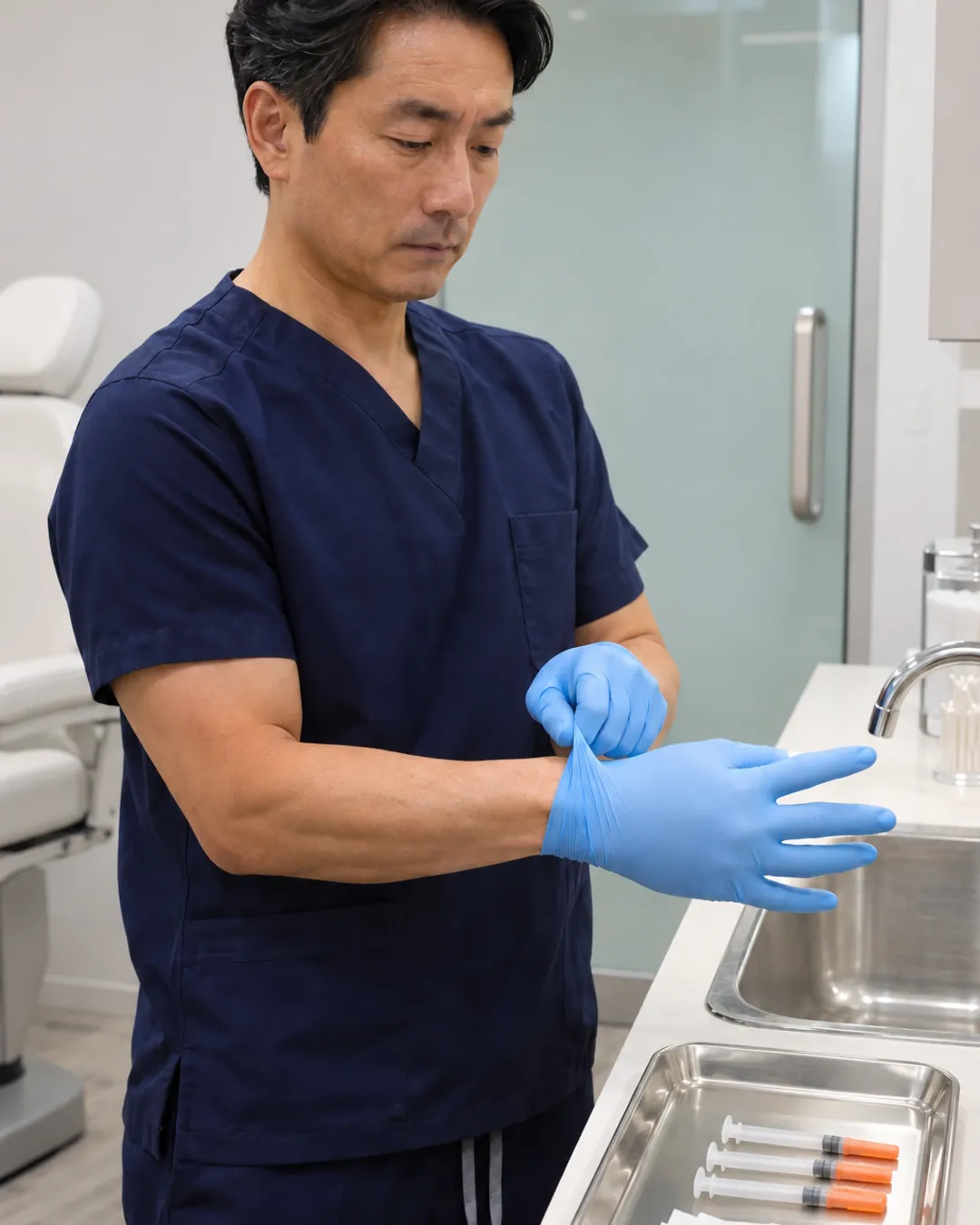
The American Society of Plastic Surgeons says it is to your advantage to seek a med spa under the supervision of a board-certified plastic surgeon. The two statements ask for different things, knowledge in one and supervision in the other, so put both questions to any clinic you are considering.
Where to check the rules
The American Med Spa Association has an article titled California Has Strict Laws Regarding Laser Treatments and Injectables. A page titled Dermal Fillers (Soft Tissue Fillers) | FDA covers fillers.
For a second view, the Welsh health service guidance on non-surgical cosmetic procedures is one option. It is a Welsh page, so use it for questions to ask and not for California rules. The American Academy of Dermatology also lists five unsafe skin care trends to avoid.
The child guide
Read Botox parties and home injection risks next. It covers two settings outside a clinic, parties and homes, and it is the guide for a reader who has already been offered a treatment in one of them.
Where handling it yourself stops
Your part ends at the questions. The product, the needle and any reaction after it are for a licensed clinician to handle. If you need the product side first, the Botox and neurotoxins hub is the next stop.